
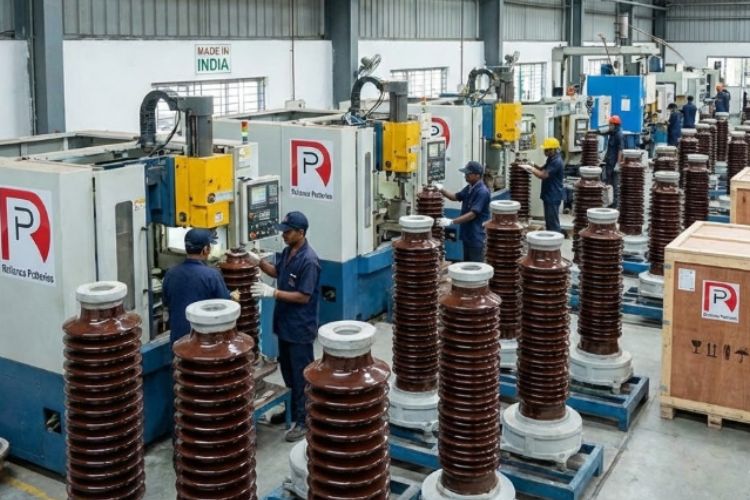
Behind every uninterrupted power supply lies a quiet hero most people never notice—electrical insulators. As India upgrades its grid to meet rising demand, the role of dependable insulator manufacturing has become more critical than ever. Who makes these components, and why does their quality shape the future of power distribution?
Across substations, transmission lines, and industrial plants, Electrical Insulator Manufacturers in India are working behind the scenes to support one of the world’s fastest-growing power sectors. Their products may look simple, but the engineering behind them is anything but.
Also Read: Insulation Solutions for Food & Beverage Cold Storage
The Growing Importance of Electrical Insulators in India
India’s electricity consumption has steadily climbed with urbanization, electrification of rural areas, and the rise of electric mobility. According to data from the Central Electricity Authority (cea.nic.in), the country’s installed power capacity has crossed 430 GW, placing immense pressure on transmission and distribution infrastructure.
Insulators sit at the intersection of safety and efficiency. They prevent current leakage, withstand mechanical stress, and survive harsh weather—sometimes for decades. In many ways, they are the silent guardians of the grid.
Why Quality Matters More Than Ever
Modern grids operate at higher voltages and tighter tolerances. A minor failure in an insulator can cascade into outages affecting thousands of consumers. This is why utilities and EPC contractors increasingly prioritize certified, tested products over cheaper alternatives.
- Grid reliability: High-quality insulators reduce forced shutdowns and maintenance cycles.
- Safety assurance: Proper insulation minimizes fire hazards and equipment damage.
- Long-term economics: Durable products lower replacement and downtime costs.
How Indian Manufacturers Are Raising the Bar
Indian insulator manufacturers have evolved significantly over the last decade. What was once a largely domestic supply market now caters to global utilities and OEMs. Investments in kiln technology, material science, and automated testing are changing perceptions worldwide.
Many manufacturers now align their processes with IEC and IS standards while adopting rigorous in-house testing protocols. Some even collaborate with academic institutions and research labs to refine dielectric performance—an approach encouraged by energy transition studies published by the International Energy Agency (iea.org).
Diverse Product Portfolios for Diverse Needs
The Indian power sector is anything but uniform. From coastal humidity to desert heat, operating conditions vary wildly. To meet these challenges, manufacturers offer specialized solutions, including ceramic, composite, and hybrid insulators.
In the midstream of this ecosystem, the role of a Solid Core Insulators Manufacturer becomes particularly vital. These insulators are widely used in switchgear and substations, where mechanical strength and thermal stability are non-negotiable.
Specialized Applications Driving Innovation
Beyond conventional transmission lines, insulators are now crucial in pollution control systems, renewable energy plants, and industrial exhaust management. Electrostatic precipitators (ESPs), for instance, rely on advanced insulation to function safely at high voltages.
This is where expertise from a trusted FRP Shaft Insulators Manufacturer becomes indispensable. These components must balance electrical resistance with mechanical flexibility, often in chemically aggressive environments.
- Thermal resilience: Withstanding continuous high-temperature operations.
- Corrosion resistance: Essential for industrial and coastal installations.
- Custom engineering: Tailored designs for project-specific demands.
Export Potential and Global Trust
India’s insulator industry is no longer inward-looking. Export demand from Africa, the Middle East, and Southeast Asia continues to rise. According to trade insights shared by India Brand Equity Foundation (ibef.org), electrical equipment exports from India have seen consistent growth, supported by competitive pricing and improving quality benchmarks.
This global acceptance reflects years of process discipline, material upgrades, and an increasing focus on sustainability—another factor shaping procurement decisions worldwide.
Frequently Asked Questions
What makes Indian electrical insulator manufacturers competitive globally?
They combine cost efficiency with adherence to international standards, backed by improving R&D and testing capabilities.
Are solid core insulators suitable for high-voltage substations?
Yes, solid core insulators are widely used in substations due to their mechanical strength and reliable dielectric properties.
Where are FRP shaft insulators typically used?
They are commonly used in ESP systems, industrial plants, and pollution control equipment operating under high voltage.
How do insulators support renewable energy infrastructure?
They ensure safe power transmission from solar and wind installations, often in challenging outdoor environments.
Final Thoughts
Electrical insulators may never grab headlines, but they quietly shape the reliability of India’s power future. As the grid expands and modernizes, strong partnerships with capable manufacturers will remain a decisive advantage.
Blog Development Credits:
This article was ideated and refined by Reliance Potteries, crafted with support from advanced AI tools, and polished through expert SEO review by the Reliance Potteries team.


